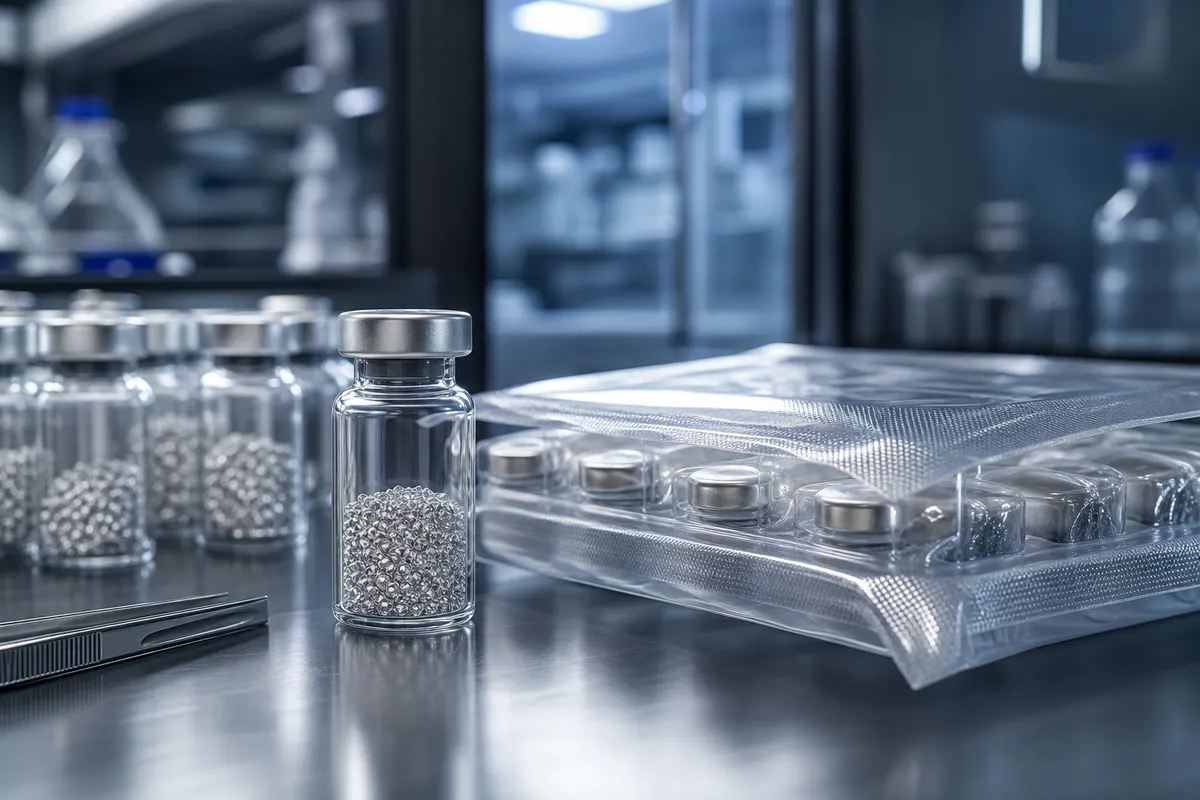
Pharmaceutical silver safety is critical for any producer using silver in medical products, disinfectants, or implantable devices. Unlike general industrial use, pharmaceutical industries have stricter requirements for purity, impurities, origin traceability, and documentation. Silver used must not only be high purity but free of heavy metals, toxic elements, and organic impurities. 999.9 silver is the starting point, not the end of quality control.
International Regulatory Frameworks
In the United States, USP defines standards for Silver Nitrate and other silver compounds. Europe follows the European Pharmacopoeia (EP). Both specify limits for impurities (Heavy Metals Test, Limit Test). For silver-containing medical devices, ISO 10993 defines biotest sets: cytotoxicity, sensitization, irritation, and systemic toxicity.
Iran's FDA also requires raw material quality documentation for drug and device registration. Certificate of Analysis (CoA) from a trusted supplier is integral to the registration file.
Critical Impurities and Limits
Heavy metals are the most dangerous impurities: lead (Pb), cadmium (Cd), mercury (Hg), and arsenic (As). Even trace amounts (ppm) can be unacceptable in products contacting tissue directly. USP typically sets lead limits below 10 ppm for many silver compounds.
Other metal impurities such as copper, nickel, and zinc must also be controlled. ICP-MS is the most precise method for trace impurities. Trusted suppliers such as Bazaarnoghre include ICP-MS in CoA.
Origin Traceability and Batch Records
Pharmaceutical industries under cGMP must fully trace each raw material batch from mine to final delivery. Batch number, production date, test results, and storage conditions must be recorded. This transparency is critical for product recall.
Forms of Silver in Pharmaceuticals
Silver is consumed as silver nitrate (disinfectant and caries arrest), silver sulfadiazine (burn cream), nano-silver (medical devices), metallic silver (dressings and coatings), and silver chlorophyll (topical disinfectant). Each form has specific purity and test requirements.
Silver nitrate is among the most consumed compounds. USP monograph for Silver Nitrate defines exact purity, pH, solubility, and impurity limits. Production from 999.9 silver with nitric acid directly affects final product quality.
Biological Evaluation and Toxicology
Silver is not an essential human metal but is metabolized in small amounts. Acute silver toxicity is rare; chronic poisoning (argyria) occurs with long contact. Pharmaceutical products must prove Margin of Safety between effective and toxic dose.
In vitro and in vivo tests precede clinical trials. ISO 10993-5 (cytotoxicity) and ISO 10993-10 (sensitization) are baseline tests. Quality raw materials reduce failure risk.
| Standard | Domain | Key Points |
|---|---|---|
| USP / EP | Drug compounds | Purity, impurities, solubility |
| ISO 10993 | Medical devices | Biocompatibility, cytotoxicity |
| ISO 13485 | Quality system | Medical device QMS |
| cGMP | Drug production | Batch traceability |
| ICH Q3D | Heavy metals | Toxic element limits |
Guide to Selecting a Silver Supplier
Drug and device producers should evaluate suppliers on: guaranteed 999.9 purity, CoA per shipment, ICP-MS for heavy metals, batch traceability, price stability, and delivery reliability. Supplier audits are common in large pharma.
Bazaarnoghre focuses on quality transparency and documentation as a partner for Iranian pharmaceutical industries. See ../../../index.html#products and ../../../index.html#contact. Related: ../nano-silver-antibacterial/ and ../.
Supplier Audit and Risk Management
Large pharma companies conduct supplier quality audits before approval: facility visit, ISO 9001 review, batch sampling, and delivery reliability. Incomplete documentation or missing batch traceability removes suppliers from approved lists.
Supply chain risk management includes alternate suppliers, safety stock, and quality insurance. Silver price volatility should be reflected in long-term contracts — some use LBMA-based pricing formulas.
Future Regulation of Silver in Pharma
Regulators are updating nano-silver rules. EU REACH classifies nano-silver as specially monitored under REACH. FDA is preparing separate guidance for nano-material products. Producers working with standard 999.9 silver today must prepare for stricter nano regulations.
Challenges for Iran's Pharmaceutical Industry
Sanctions and currency volatility have made quality raw material access difficult. Importing pharmagrade silver is expensive. Domestic supply meeting international standards reduces dependency. Investment in QC labs and ISO certification for domestic producers is essential.
Silver Supply Guide for Pharmaceuticals
Bazaarnoghre supplies 999.9 bar, shot, and industrial silver with XRF/ICP-MS, batch traceability, transparent pricing, nationwide delivery, free technical consultation, and long-term contracts. ../../../index.html#products, ../../../index.html#contact, ../.
Summary
Pharmaceutical silver safety results from a complete quality chain from mine to final product. 999.9 purity, heavy metal control, batch traceability, and USP/EP/ISO compliance are non-negotiable. Bazaarnoghre facilitates this chain for Iranian producers with quality silver and complete documentation.
Further reading
Related articles
To view 999.9 fine silver products, visit the Bazaarnoghre products page.