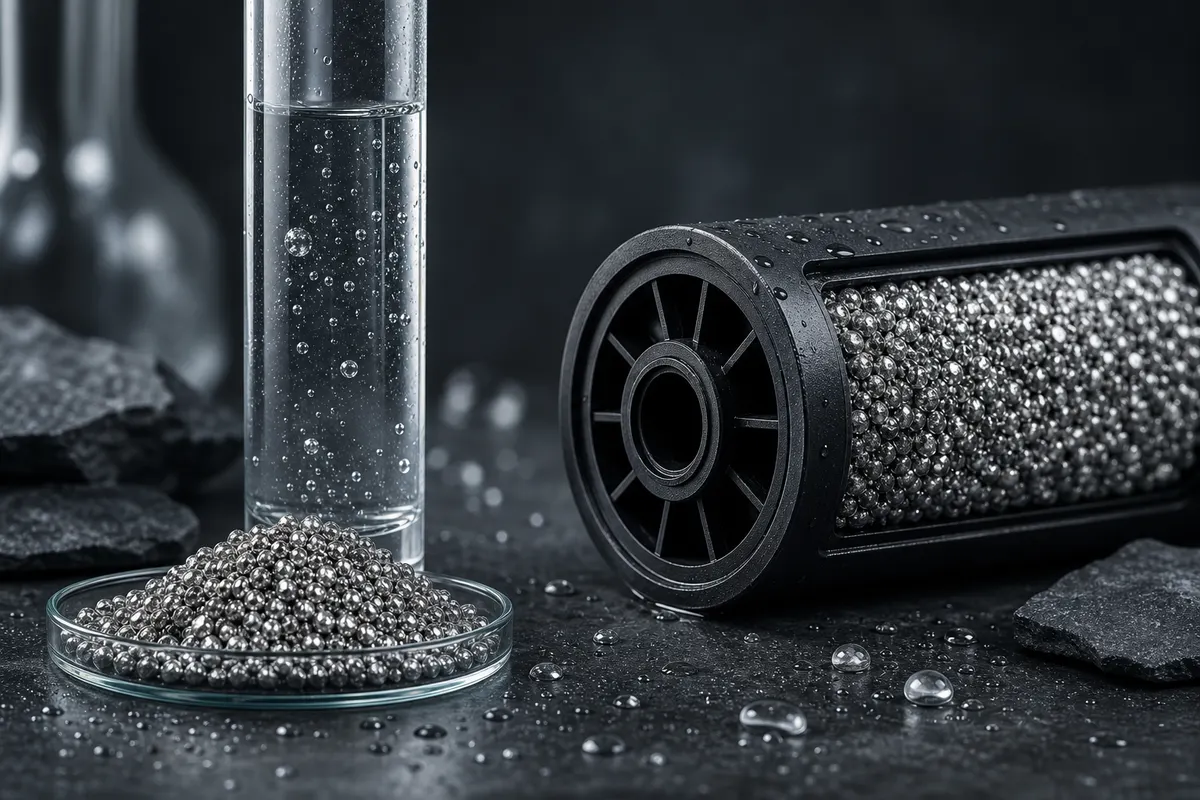
Water purification with silver is one of the oldest disinfection methods in human history. Romans kept silver coins in water to keep it fresh. Modern science understands the antimicrobial mechanism of silver ions (Ag⁺) and uses them in home, pool, aerospace, and industrial purification systems. Unlike chlorine, silver creates no bad taste or odor and is safe at permitted concentrations.
Silver ion disinfection mechanism
Silver ions react with bacterial cell membranes, inhibit respiratory enzymes, and disrupt DNA. Unlike chlorine, which kills microbes, silver stops growth and reproduction (bacteriostatic) and at higher levels acts as bactericidal. Silver is effective against bacteria, some viruses, and fungi. Key advantage: bacteria develop less resistance to silver than to antibiotics or even chlorine.
Silver in water acts ionically (Ag⁺) from silver electrodes, colloidal silver, or releasing metallic silver. Effective concentration is typically 0.01 to 0.1 mg/L (ppb) — far below the EPA limit of 100 ppb.
Home and commercial applications
Home water filters use silver elements to prevent bacterial growth in filters and stored water. Point-of-use (POU) and whole-house (POE) systems use silver cartridges. In refrigerators, silver in water dispensers prevents biofilm growth.
Swimming pools and spas use silver ionization alone or with chlorine for clearer, odor-free water with less skin irritation. In aerospace, silver purification systems recycle drinking water.
Industrial and medical purification
Hospitals, dental clinics, and labs need high-quality water. Combined UV-silver systems disinfect lab water. In food and pharma, production water must be microbe-free and silver is an approved option.
Standards and safety limits
EPA sets the drinking water silver limit at 100 ppb (0.1 mg/L). WHO has a similar limit. At permitted levels silver is safe, but long-term excess can cause argyria. Commercial systems are designed to stay below limits.
Purification system makers must use high-purity silver so toxic impurities do not enter water. Bazaarnoghre 999.9 silver is suitable for this use.
Comparison with chlorine and other methods
| Method | Advantages | Disadvantages | Typical level |
|---|---|---|---|
| Silver (ionic) | No taste/odor, low microbial resistance | Slower than chlorine | 0.01–0.1 mg/L |
| Chlorine | Fast, cheap | Taste, odor, byproducts | 0.2–2 mg/L |
| UV | No chemicals | No residual effect | — |
| Ozone | Powerful | Unstable, expensive | Variable |
Silver supply for the water treatment industry
Ionization system makers need silver electrodes, pure metallic silver, or colloidal silver. Electrodes are made from 999.9 silver and gradually consumed over system life. Silver purity directly affects effectiveness and safety.
Food and beverage industry use
Food and beverage plants need high-quality process and equipment wash water. Industrial silver purification in mineral water, soft drink, and juice lines prevents biofilm in pipes and tanks. HACCP and ISO 22000 require microbial water control.
In agriculture, silver-treated irrigation water for reducing fungal and bacterial crop disease is under research.
Environmental considerations
High silver ion levels can affect aquatic life. EPA and environmental agencies regulate industrial effluent silver limits. Commercial systems must keep released silver within safe ranges and treat wastewater before discharge. Recycling silver from spent electrodes and effluent is recommended economically and environmentally.
Bazaarnoghre supplies industrial silver and 999.9 ingots for this industry. ../../../index.html#products and ../../../index.html#contact. Related articles: ../.
Guide to silver supply for water treatment
Procurement challenges: price volatility, 999.9 purity, export docs, import competition. Bazaarnoghre supplies 999.9 ingots, granules, and industrial silver with certificates, batch traceability, and long-term contracts.
../../../index.html#products, ../../../index.html#contact, ../.
Industrial FAQ about 999.9 silver
Ingot vs granule? 999.9 vs 999? XRF and CoA verification. ../../../index.html#products.
Industrial FAQ about 999.9 silver
Ingot vs granule? 999.9 vs 999? XRF and CoA verification. ../../../index.html#products.
Industrial FAQ about 999.9 silver
Ingot vs granule? 999.9 vs 999? XRF and CoA verification. ../../../index.html#products.
Conclusion
Silver water purification is a healthy, effective, taste-free disinfection method. From home to space to industry, silver ions play a key role in safe water. Raw silver quality ensures system safety and performance.
Further reading
Related articles
To view 999.9 fine silver products, visit the Bazaarnoghre products page.