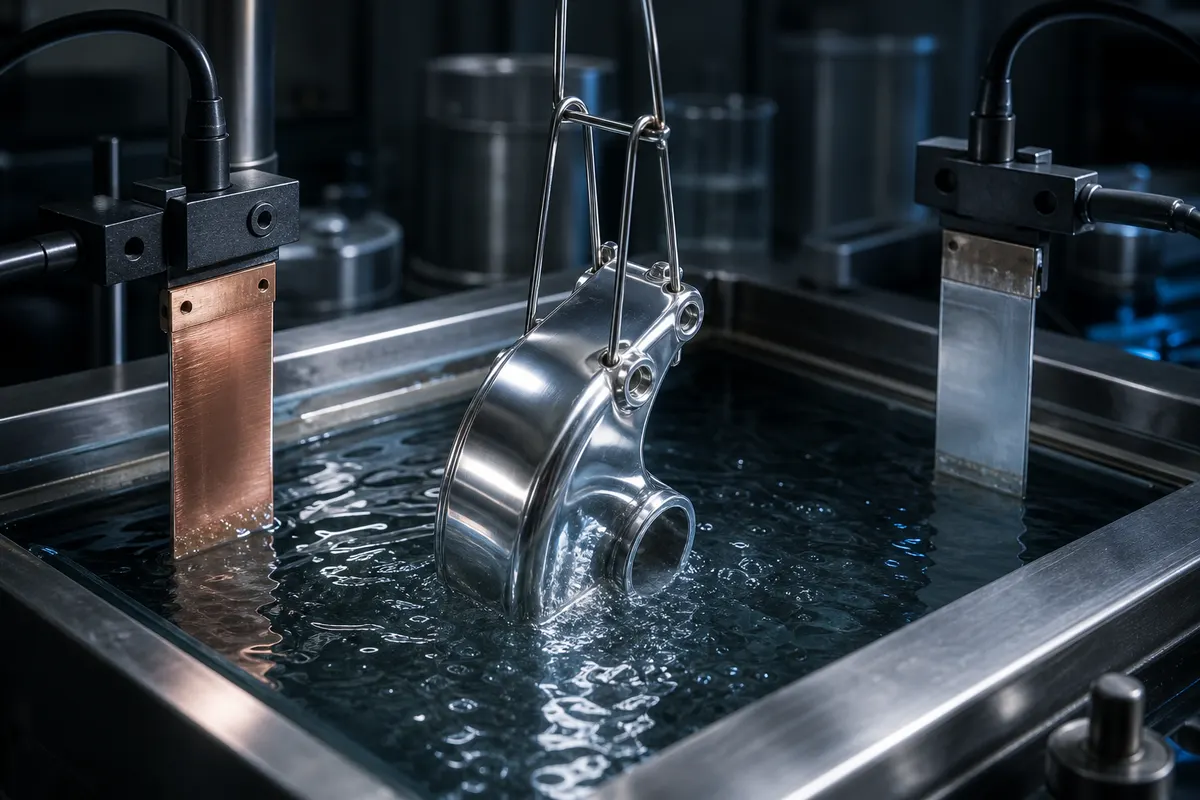
Silver plating is the process of depositing a thin silver layer on metal, plastic, or ceramic surfaces. This coating is used for aesthetics, reflectivity, electrical conductivity, corrosion resistance, and antimicrobial properties. Jewelry, electronics, silverware, mirror making, and automotive industries each use different methods and thicknesses. The main raw material is 999.9 silver as silver cyanide, non-cyanide silver, or silver nitrate.
Silver plating methods
Galvanic electroplating: The most common method. The workpiece (cathode) and silver anode are placed in electrolyte (usually silver cyanide or non-cyanide) and DC current deposits silver on the surface. Layer thickness is controlled by time, current density, and temperature.
Electroless plating: Chemical silver reduction without electrical current. Used on plastic and non-conductive surfaces. Better uniformity on complex shapes.
PVD (Physical Vapor Deposition): Physical silver evaporation in vacuum and deposition on the surface. For thin (nanometer) coatings in optics, electronics, and automotive decor.
Industrial applications
In electronics, silver plating on contacts, connectors, and PCBs reduces contact resistance. Typical thickness 1–10 microns. In jewelry, plating on brass or sterling gives bright silver appearance at lower cost. In silverware, plating on nickel or brass at 20–100 microns for durability and beauty.
In automotive, PVD silver on mirrors and interior trim. In kitchenware, plated cutlery and serveware. In music, silver-plated flute heads for warm tone and reflectivity.
Surface preparation and pre-plating
Plating quality depends on surface prep: degreasing, acid cleaning, activation, and sometimes nickel undercoat for adhesion. Contaminated surfaces cause peeling and blistering.
Electrolytes and environment
Silver cyanide (AgCN) electrolyte is oldest and most effective but cyanide is toxic and effluent needs treatment. Non-cyanide electrolytes (sulfur or sulfite based) are safer alternatives. REACH and EPA limit cyanide use. Plating shops should recover silver from effluent — silver is valuable and recycling is economical.
Thickness and standards
Thickness varies by application: electronics contacts 1–5 microns, jewelry 5–20 microns, tableware 20–100 microns. ASTM B700 defines silver plating on copper, nickel, and alloys. Quality tests include thickness (XRF, micrometer), adhesion (bend test), and visual inspection.
| Application | Method | Thickness (μm) | Purity |
|---|---|---|---|
| Electronic contact | Galvanic | 1–10 | 99.9% |
| Jewelry | Galvanic | 5–20 | 99.9% |
| Silverware | Galvanic | 20–100 | 99.9% |
| Mirror / optics | Chemical | 0.1–0.2 (nm scale) | 99.9% |
| Auto decor | PVD | 0.05–0.5 | 99.9% |
Silver supply for plating shops
Plating shops need silver cyanide (AgCN), silver nitrate for chemical baths, or 999.9 ingots for galvanic anodes. Large shops may consume several kg of silver monthly. Stable pricing and guaranteed purity are critical for cost and quality control.
Military and aerospace
Defense and aerospace use silver plating for radar cross-section (RCS) reduction and EMI shielding. Thin silver on composites and plastics creates effective electromagnetic shields. In satellites and spacecraft, silver connections perform stably in vacuum and extreme temperature.
Purity requirements exceed consumer electronics — any impurity can cause problems in vacuum and space radiation.
Maintenance and long-term care
Silver coatings may tarnish over time, especially in humid, sulfur-rich environments. Dry storage, moisture-proof packaging, and protective lacquer extend coating life. For home silverware, proper polishing cloths and velvet cases are recommended.
Bazaarnoghre supplies 999.9 ingots, granules, and industrial silver for plating. ../../../index.html#products and ../../../index.html#contact. For mirror making see ../silver-mirror-manufacturing/ and more at ../.
Guide to silver supply for plating industry
Bazaarnoghre supplies 999.9 with certificates, batch traceability, and long-term contracts. ../../../index.html#products, ../../../index.html#contact, ../.
Industrial FAQ about 999.9 silver
Ingot vs granule? 999.9 vs 999? ../../../index.html#products.
Industrial FAQ about 999.9 silver
Ingot vs granule? 999.9 vs 999? ../../../index.html#products.
Industrial FAQ about 999.9 silver
Ingot vs granule? 999.9 vs 999? ../../../index.html#products.
Conclusion
Silver plating is a versatile technology used across dozens of industries. Method, thickness, and raw material quality determine the final result. With 999.9 silver from a trusted supplier, coating quality is assured.
Further reading
Related articles
To view 999.9 fine silver products, visit the Bazaarnoghre products page.