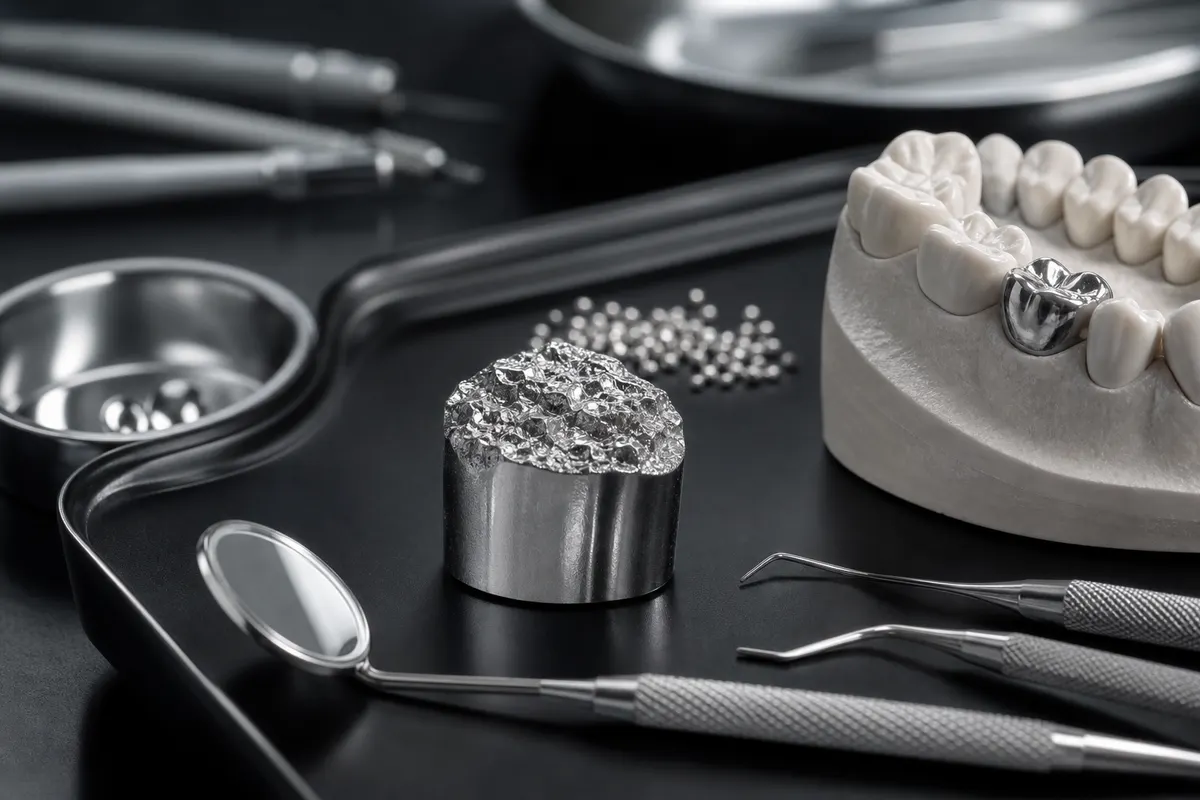
Silver in dentistry has a history as long as the field itself. From silver-mercury amalgam used in tooth restoration for over 150 years to nano-silver coatings on titanium implants, this precious metal plays diverse roles. Antimicrobial properties, suitable conductivity, and alloying ability make silver indispensable in dental laboratories. Access to guaranteed 999.9 silver is critical for dental material companies and laboratories today.
Silver Amalgam: Heritage and Current Status
Dental amalgam is an alloy of silver, tin, copper, and mercury that forms a hard, durable filling material. Silver typically comprises 40 to 70 percent by weight. High mechanical strength and low cost made amalgam the main choice for decades.
Environmental concerns about mercury and aesthetic demand have gradually reduced amalgam use in developed countries. The EU restricted amalgam in children and pregnant women from 2018. Still, amalgam remains common in many countries including Iran for posterior restorations.
Dental Alloys and Pure Silver
Beyond amalgam, silver is used in dental soldering alloys, casting shot, and some temporary compounds. Dental labs use high-purity shot for crown and bridge casting. Bazaarnoghre shot with uniform particle size and 999.9 purity suits these applications.
In aesthetic restorations, nano-silver composites for plaque and secondary infection control are under study. Controlled nano-silver in dental resin can add antimicrobial properties without changing appearance.
Silver in Implants and Prosthetics
Dental implants are titanium but nano-silver surface coating can reduce peri-implantitis risk. Early animal and clinical studies show promising results. Silver coating on removable prosthesis surfaces also acts antifungal and antibacterial.
Antimicrobial Properties in Oral Hygiene
Oral bacteria — especially Streptococcus mutans — cause tooth decay. Silver ions inhibit bacterial enzymes and degrade cell membranes, reducing biofilm growth. Some toothpastes and mouthwashes contain nano-silver or colloidal silver.
In pediatric dentistry, silver nitrate solution is used for arrest treatment — stopping active decay without restoration. This low-cost method is recommended by WHO for underserved areas.
Safety Considerations and Regulations
Main concerns are systemic silver accumulation (argyria) and mercury toxicity in amalgam. FDA considers amalgam safe but recommends limited use. For nano-silver products, toxicology and regulatory approval are still evolving.
Labs and dental material producers must use silver with purity certificates free of heavy metals. Bazaarnoghre provides XRF analysis and 999.9 purity certificates for the dental supply chain.
| Application | Silver Form | Approx. Amount | Status |
|---|---|---|---|
| Dental amalgam | Silver-tin-copper alloy | 40–70% by weight | Declining in West |
| Dental casting | 999.9 shot | 100% pure silver | Active |
| Antibacterial composite | Nano-silver | 0.1–1% by weight | Under research |
| Implant coating | Nano-silver | Nanometer layer | Early clinical |
| Caries arrest | 38% silver nitrate | Topical solution | WHO recommended |
Supply Guide for Laboratories
Dental labs need silver with good workability, uniform melting, and no impurities. Standard-grain shot for casting and bars for alloying are supplied. Stable price and on-time delivery are critical for patient-order labs.
Global Trends and Amalgam Regulation
The EU banned amalgam in children under 15, pregnant women, and nursing mothers under Directive 2017/852. Canada and some US states have similar limits. Trend moves toward aesthetic restorations (composite and ceramic) and mercury-free materials. In developing countries including Iran, amalgam remains common due to low cost and durability.
Future of Silver in Digital Dentistry
CAD/CAM and 3D printing transformed crown and bridge production. Zirconia and lithium disilicate replaced metal-ceramic crowns. Silver remains in some internal layers and connections. Silver-palladium alloy 3D printing for complex structures is under study. Preventive dentistry with silver diamine fluoride (SDF) is a novel low-cost caries control approach in children.
For nano-silver antimicrobial properties, read ../nano-silver-antibacterial/. Products: ../../../index.html#products. Inquiry: ../../../index.html#contact. Medical hub: ../.
Silver Supply Guide for the Dental Industry
Bazaarnoghre supplies 999.9 shot, bars, and industrial silver with XRF/ICP-MS certificates, batch traceability, transparent pricing, nationwide delivery, and long-term contracts. ../../../index.html#products and ../../../index.html#contact.
Conclusion
Silver in dentistry has evolved from traditional material to modern technology. Amalgam still has a place but the future trends toward aesthetic compounds, nano-silver, and antimicrobial implant coatings. Primary silver quality is the foundation of every dental product.
Further reading
Related articles
To view 999.9 fine silver products, visit the Bazaarnoghre products page.