Buying silver for goldsmiths and jewelers is more than a simple metal purchase — it is a strategic decision that directly affects final product quality, production cost, brand reputation, and customer satisfaction. Professional workshops need raw material with defined purity, credible certificates, transparent pricing, and reliable supply. In the market, the variety of suppliers and subtle differences in fineness, form (ingot, granule, sheet), and sales terms make selection complex for buyers. This comprehensive guide from ../ reviews practical criteria for wholesale silver purchase for workshop owners, production managers, and independent goldsmiths.
Whether you need 999.9 silver for alloying or ready granules for casting, the principles are the same: reputable source, documentation, and alignment with your production needs. Articles ../sterling-silver-925/, ../jewelry-alloy-guide/, and ../silver-granule-casting/ provide the necessary technical background; here we focus on commercial and operational aspects.
Types of Silver Forms for Jewelry Workshops
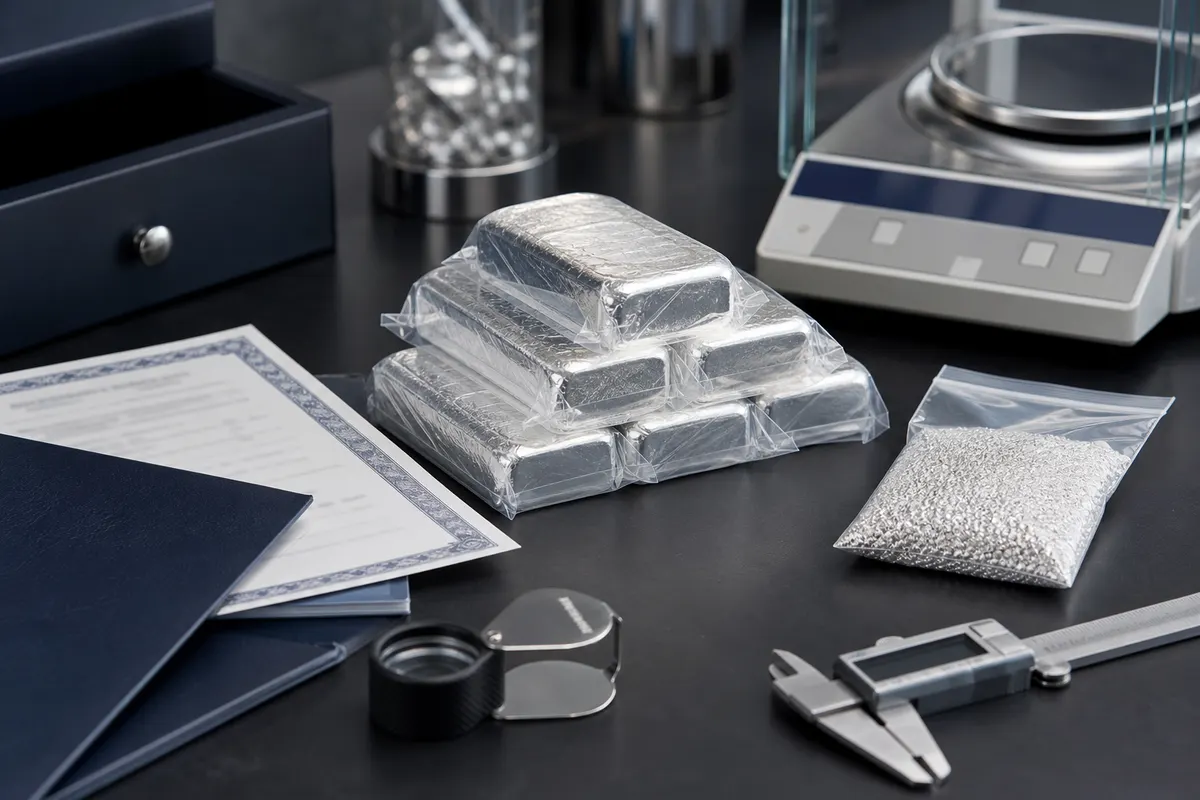
Silver ingots: Suitable for long-term storage, large-scale alloying, and some sheet-making processes. Usually supplied in standard weights (100 g to several kilograms). Silver granules: Ideal for frequent casting and fast melting. 925 silver sheet and wire: For workshops that do not alloy and go directly to fabrication. Granules and powder: Used in special industrial applications and some advanced techniques.
Form selection depends on workshop equipment, production volume, and product type. Bazaarnoghre offers a range of 999.9 silver ingots and granules for different workshop needs — details at ../../../index.html#products.
Criteria for Choosing a Silver Supplier
Purity and Authenticity Certificate
The supplier must provide a 999.9 purity certificate (or declared fineness) from a reputable laboratory. Batch number on packaging or invoice is essential for traceability. If possible, test a sample at an independent lab with XRF before a long-term contract.
Quality Consistency Across Orders
One good purchase is not enough; the supplier must maintain the same standard in every order. Records of cooperation with other workshops, warehouse visits when possible, and starting with a trial order are recommended.
Price Transparency
Raw silver price is usually linked to the global rate (LBMA reference) plus premium (minting, shipping, packaging, and supplier margin). A reputable seller explains the calculation; treat unrealistically low prices with caution — they may indicate lower purity or an unknown source.
Silver Purchase Checklist for Workshops
| Topic | Question for supplier | Desired standard |
|---|---|---|
| Purity | Do you have a purity certificate? | 999.9 per thousand with lab document |
| Traceability | Batch number on product? | Traceable batch on invoice |
| Product form | Ingot, granule, or both? | Matched to workshop equipment |
| Price | How is daily price calculated? | Transparent by weight and reference rate |
| Delivery | Lead time and packaging? | Moisture- and shock-resistant packaging |
| Support | Technical consultation available? | Responsive on form and weight selection |
| Contract | Payment and return terms? | Written and enforceable |
Pricing and Cost Management in the Workshop
Silver is a raw material with global price volatility. Many workshops manage purchases based on orders in progress or periodic supply contracts to reduce fluctuation risk. Recording purchase price per batch in production accounting enables accurate cost calculation. Reflecting this cost in final product pricing helps preserve margin during inflationary periods.
Comparing suppliers only on lowest price per gram can be misleading: lower purity, short weight, or missing certificates cost more long term. Real value = price × purity × supply reliability.
Packaging, Shipping, and Storage
Silver should be delivered in dry, clean packaging. After receipt, store in a low-humidity environment away from chemicals. Keep ingots and granules separate from other metals. Batch labeling in the workshop warehouse helps trace final product quality.
Legal and Tax Considerations
Official purchase with valid invoice is essential for registered workshops. Payment terms (cash, short credit), authenticity guarantee, and return policy in case of purity dispute should be clear before large transactions. For imports, comply with customs regulations and national standards.
Inventory Management and Supply Planning
Active workshops usually keep safety stock equal to two to four weeks of consumption to protect against price swings and delivery delays. Recording monthly granule or ingot consumption improves next purchase forecasting. Seasonal supply contracts with reputable suppliers can reduce premium at high volume.
Aligning silver purchase with the production calendar — e.g., before peak season or trade shows — prevents production line stoppages. During sharp price rises, some workshops secure part of needs early; this decision should be paired with cash flow and warehouse space analysis. Recording date and price of each purchase in a simple spreadsheet makes year-end raw material cost trend analysis easy.
Detecting Suspicious Raw Material After Delivery
After receiving a shipment, match total weight to the invoice. Granule or ingot appearance should be uniform without visible impurities. If color differs, shape is abnormal, or there is a chemical smell, test a sample before entering production. Keeping a sample from each received batch for six months to one year helps traceability if a final customer complains.
Never mix raw material from unknown sources with certified granules — quality traceability becomes impossible. A simple batch-label warehouse system is feasible and very effective even for small workshops. When negotiating with a new supplier, ask about minimum order, delivery time to different cities, and trial sample shipment.
Why Bazaarnoghre for Jewelry Workshops?
Bazaarnoghre operates as a specialist silver supplier focused on 999.9 purity, standard ingots and granules, laboratory certificates, and technical support for the jewelry and goldsmith industry. Our team assists workshops in choosing the right form, weight estimation, and continuous supply planning. For daily price inquiry and free consultation, see ../../../index.html#contact.
Informed silver purchase is the foundation of quality production and a reputable brand. Using the checklist in this article and working with a trusted supplier prepares your workshop for sustainable growth. Other specialist articles in the jewelry section of ../ are available to you.
Contract Questions Before Wholesale Purchase
Before signing a long-term supply contract, put these in writing: minimum and maximum weight per order, how daily price is updated, shipping responsibility to workshop door, return conditions in case of purity test dispute, and technical support response time. Clarity in these clauses prevents costly disputes and keeps the supplier-workshop relationship stable.
Summary
Buying silver for goldsmiths means choosing both technical quality and a stable commercial partnership. 999.9 purity with documentation, form matched to production, transparent price, and a responsive supplier — four pillars of the right decision. Bazaarnoghre upholds these standards in its supply chain and is ready to cooperate with workshops nationwide. A trusted supplier is part of your production team.
Next step: compare this article's checklist with your current supply situation. If you lack anything (certificate, batch, price, support), receive a small trial order from a new source with full documentation and test it in real production before fully switching suppliers. Your workshop's success starts with raw material quality — and the right choice today guarantees tomorrow's product brilliance. For daily price inquiry and specialist consultation, ../../../index.html#contact and ../../../index.html#products are available.
Further reading
Related articles
To view 999.9 fine silver products, visit the Bazaarnoghre products page.