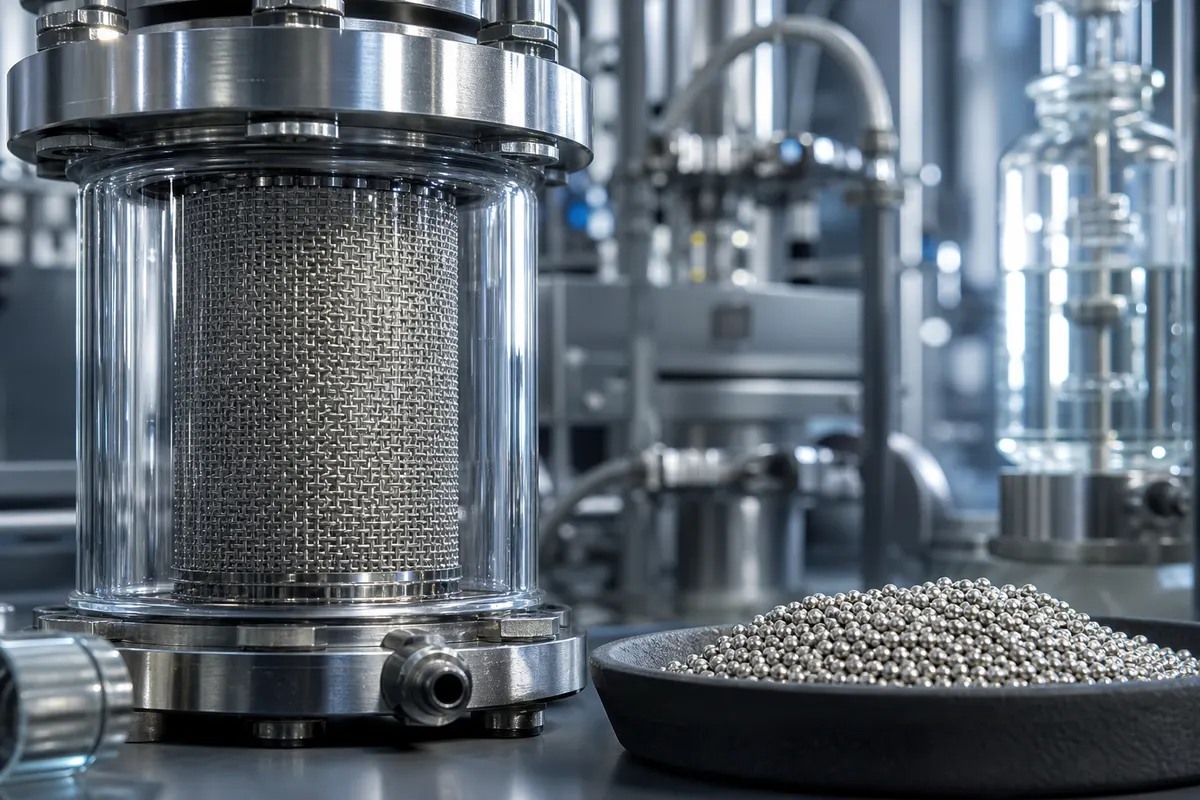
Silver in ethylene oxide (ethylene oxide / EO) share a deep, inseparable relationship. Ethylene oxide is a colorless, highly reactive gas with over 20 million tonnes produced globally each year. Its main use is producing ethylene glycol (antifreeze, polyester), polyethylene glycol (PEG), ethylene amines, and dozens of petrochemical derivatives. No commercial EO process exists without a silver catalyst — silver is the only metal that oxidizes ethylene to ethylene oxide with high selectivity.
Ethylene Oxide Production Process
The main reaction occurs in the gas phase on fixed silver catalyst:
C₂H₄ + ½O₂ → C₂H₄O (ethylene oxide) ΔH = −105 kJ/mol
Feed includes ethylene (from naphtha cracking), oxygen (from air separation), and diluent gas (CO₂ or methane). Reactor temperature is 220 to 280 °C and pressure 10 to 30 bar. Ethylene-to-EO yield is typically 70 to 85 percent — the rest oxidizes to CO₂ and water. Even a 1% selectivity improvement in a large unit means millions of dollars in annual savings.
Licensed Process Technologies
Several companies license EO production technology. Shell (now part of Dow) is a pioneer with decades of silver catalyst experience. Scientific Design (SD) offers widely used tubular reactor technology. Hyundai Chemical and CNCEC are also licensors in Asia. Each technology has its own silver catalyst formulation, reactor design, and operating conditions.
Reactor and Catalyst
The reactor typically has thousands of tubes filled with silver-on-Al₂O₃ catalyst heated by steam or thermal oil (exothermic reaction). Feed gas passes through tubes and EO is produced. Silver loading is 10 to 20 percent by weight on carrier.
Silver Consumption in EO Production
An EO unit with 300,000 to 500,000 tonnes per year capacity may need 30 to 60 tonnes of silver in initial loading. Over catalyst life, silver evaporates and is lost; every 1 to 3 years the catalyst is regenerated or replaced. Spent silver is recovered and recycled. Roughly 10 to 15 percent of global industrial silver demand goes to EO catalysts.
Table: EO Process Parameter Comparison
| Parameter | Typical Range | Effect on Silver |
|---|---|---|
| Temperature | 220–280°C | Silver evaporation at high temp |
| Pressure | 10–30 bar | Safety and yield |
| O₂/C₂H₄ ratio | 0.5–1.0 | Selectivity |
| Silver loading | 10–20% wt | Catalyst activity |
| C₂H₄ yield | 70–85% | Production economics |
| Catalyst life | 1–3 years | Silver replacement cycle |
Products Derived from Ethylene Oxide
Ethylene oxide has limited direct use (medical sterilization gas). Main value is in derivatives: MEG (mono ethylene glycol) for antifreeze and polyester, DEG/TEG for gas drying, PEG for pharma and cosmetics, ethylene amines for detergents, and glycol ethers for solvents. This entire chain starts with silver catalyst.
EO Safety and Management
Ethylene oxide is toxic, flammable, and carcinogenic. Production units have strict safety systems. EO leaks are among the main hazards in petrochemicals. Proper catalyst and operating condition management is critical for both safety and economic yield.
Silver Supply for the EO Industry
EO petrochemical complexes typically have long-term contracts with catalyst makers (Shell Catalysts, Scientific Design) and silver suppliers. Silver goes from 999.9 bar to silver nitrate to catalyst. Bazaarnoghre supplies high-purity primary silver for this chain. See ../silver-catalyst-industry/ and ../silver-nitrate-production/ for the full chain.
EO Production Economics and Silver's Role in Cost
In a 400,000-tonne-per-year EO unit, silver catalyst cost may be $5 to 15 million per replacement cycle — depending on spot silver price. Since silver is recovered, the real cost is silver "rent" (purchase minus recovery). A 1% selectivity improvement can save millions annually in ethylene feed. This economics justifies investment in quality catalyst.
Downstream Units: From EO to Final Product
After EO production, adjacent units convert it to final products. The MEG unit is the largest EO consumer. PEG unit produces polyethylene glycol at various molecular weights. Ethylene amine unit produces MEA, DEA, and TEA for detergents and gas treating. The entire chain starts with silver catalyst in the EO reactor.
Future of the EO Industry and Silver
EO demand grows with polyester (PET bottles, fibers) and antifreeze in Asia. Research continues on low silver loading and higher selectivity. No silver substitute for this reaction has been found. For ../../../index.html#products, ../../../index.html#contact, and ../ with Bazaarnoghre.
Iran and Regional EO Capacity
Middle East petrochemical complexes including projects in Iran, Oman, and Saudi Arabia have launched or planned EO and MEG units. Each new unit needs tens of tonnes of silver catalyst at startup. Regional silver and catalyst suppliers play a key role. Bazaarnoghre can supply 999.9 silver as a domestic chain partner.
Ethylene Oxide Safety and Regulations
EO is a colorless gas with a sweet odor, highly flammable with a wide explosion range, and carcinogenic per IARC. Production units have detection, fire suppression, and containment systems. EO leaks have caused major petrochemical incidents historically.
Competing EO Licensed Technologies
Shell, Scientific Design, and Dow (post-merger) are the three main licensors. Catalyst is usually supplied by the licensor or an approved partner.
Global EO Capacity and Silver Demand
China is the world's largest EO producer, followed by the USA and Middle East. Each new megaproject in the Gulf or China leads to silver catalyst orders equivalent to tens of tonnes of silver.
Ethylene Glycol and the Downstream Chain
Over 70 percent of EO produced becomes MEG. MEG is used in PET for bottles and fibers. Growth in beverage packaging and apparel in Asia is the main EO demand driver. Each tonne of MEG consumes roughly 0.8 tonne EO — a direct link between plastic bottle markets and silver catalyst demand.
EO Catalyst Storage and Handling
Fresh catalyst must be stored dry and away from organics before reactor loading. Moisture can alter activity before startup. Catalyst is shipped as Al₂O₃ rings in dedicated drums. During replacement, the reactor must be fully cooled and free of flammable gas.
Operator Training and EO Reactor Safety
EO unit operators receive specialized training on safe startup, catalyst loading, and gas leak response. Annual drills for emergency scenarios are mandatory. Proper silver catalyst performance helps prevent reactor overheating.
Transparent catalyst performance reporting to management facilitates timely replacement decisions.
Continuous monitoring via outlet gas analysis and daily selectivity calculation helps determine optimal replacement timing.
Each new EO complex in the region is an opportunity to strengthen domestic silver supply with partners like Bazaarnoghre.
Summary: silver in ethylene oxide is not an option but a technical necessity — and silver catalyst quality directly affects petrochemical unit profitability.
Further reading
Related articles
To view 999.9 fine silver products, visit the Bazaarnoghre products page.