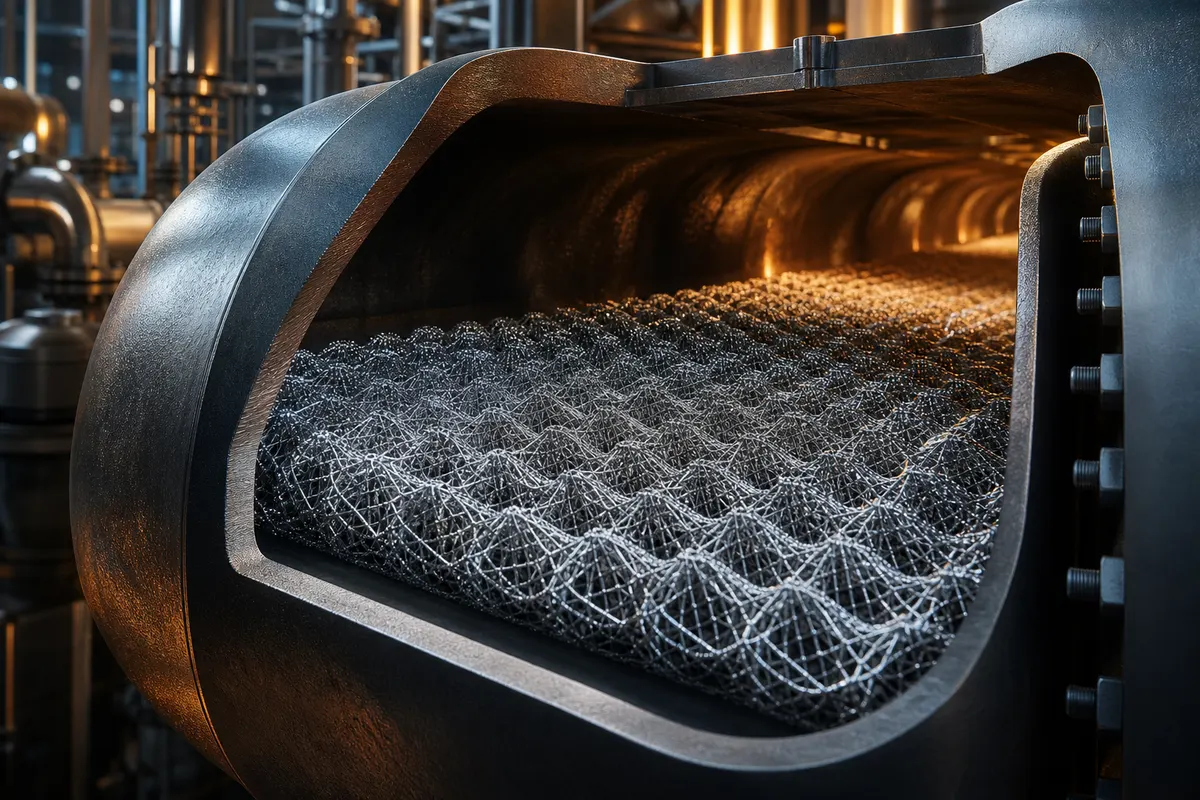
In chemical and petrochemical industries, the silver catalyst is one of the most critical materials for mass production of base feedstocks. A catalyst increases the rate of a chemical reaction without being consumed itself. Silver performs exceptionally well in selective oxidation reactions — oxidizing a substance to the desired product without burning it completely. The most important industrial use of silver catalysts is ethylene oxide production, which is the feedstock for ethylene glycol, polyethylene glycol, and dozens of petrochemical products.
Mechanism of Silver Catalysis
The surface of metallic silver has abundant free electrons that activate molecular oxygen (O₂). In ethylene oxide production, ethylene (C₂H₄) and oxygen react on the silver surface to form ethylene oxide (C₂H₄O). The main challenge is preventing complete oxidation of ethylene to CO₂ and water — and silver offers the best balance between catalytic activity and selectivity. Reaction temperature, pressure, feed gas composition, and silver particle size on the catalyst surface determine yield.
Types of Industrial Silver Catalysts
Industrial silver catalysts come in several forms. A supported catalyst consists of silver particles on aluminum oxide (α-Al₂O₃) in ring or sponge form. Silver loading is typically 10 to 20 percent by weight. A rejuvenated catalyst has lost silver replaced after several years of operation. Fixed-bed catalysts are placed in tubular reactors with feed gas passing through them.
Silver Catalyst in Formaldehyde
Beyond ethylene oxide, silver is used in formaldehyde production from methanol. Oxidation of methanol over silver or silver-iron produces formaldehyde used in resins, adhesives, and textiles.
Silver Consumption in the Catalyst Industry
An ethylene oxide unit with capacity of 300,000 tonnes per year may require 30 to 50 tonnes of silver in initial catalyst loading. Over the catalyst lifetime (1 to 3 years), some silver evaporates or is lost and must be replaced. The global ethylene oxide industry produces more than 20 million tonnes annually, and annual silver demand for catalysts reaches tens of millions of ounces. This sector is one of the most stable industrial consumers of silver.
Table: Silver Catalyst Applications in Industry
| Process | Feedstock | Product | Silver Loading |
|---|---|---|---|
| Ethylene oxidation | C₂H₄ + O₂ | Ethylene oxide (EO) | 10–20% on Al₂O₃ |
| Methanol oxidation | CH₃OH + O₂ | Formaldehyde | Silver or Ag-Fe |
| Ethylene glycol oxidation | HOCH₂CH₂OH | Glyoxal | Supported silver |
| Hydrogenation | Organic compounds | Alcohols, amines | Silver on SiO₂ |
| VOC oxidation | Volatile organics | CO₂ + H₂O | Silver-manganese |
Catalyst Lifetime and Silver Recovery
Silver catalysts lose activity after 1 to 3 years of continuous operation. Causes include carbon buildup (coking), sintering of the silver surface, and silver evaporation at high temperatures (220 to 280 °C). Spent catalyst is sent to recovery specialists such as Sabin Metal or Heraeus, where silver is recovered and recycled. Recovery rates from spent catalyst exceed 95 percent. This closed loop means catalytic silver is effectively "leased" rather than consumed.
Silver Supply for Catalyst Production
Catalyst manufacturers need silver of very high purity (999.9 and above). Impurities such as lead, copper, and palladium can alter catalytic activity. Silver is typically dissolved as silver nitrate (AgNO₃) and then deposited on a carrier by reduction. Bazaarnoghre supplies 999.9 silver bars and shot for silver nitrate and catalyst producers. Details on silver nitrate appear in ../silver-nitrate-production/ and on ethylene oxide in ../silver-ethylene-oxide/.
Silver Catalyst in Regional Petrochemical Industries
The Middle East and Asia are the world's largest ethylene oxide producers. Petrochemical complexes in Iran, Saudi Arabia, China, and India each operate EO units with capacities of hundreds of thousands of tonnes. Stable silver supply for these complexes is arranged through long-term contracts with silver refiners and catalyst manufacturers. LME silver price volatility directly affects EO unit operating costs, and price risk management is part of petrochemical financial planning.
Innovation in Catalyst Design
Academic and industrial research continues on silver nanoparticles with controlled size (5 to 50 nanometers). Smaller particles offer more active surface area but tend to sinter at operating temperature. Promoter additives such as rhodium (Rh) and cesium (Cs) improve selectivity. New deposition methods such as deposition-precipitation give better control over silver distribution on the carrier.
Technology Trends and the Future
Research continues on silver catalysts with lower loading and higher selectivity. Additives such as rhodium and cesium are sometimes added to silver. New deposition technologies such as impregnation and precipitation provide finer control over silver particle size. As ethylene oxide demand grows in Asia and the Middle East, silver catalyst needs continue to rise. For ../../../index.html#products and ../../../index.html#contact with Bazaarnoghre and the ../ chemical industry hub.
Comparing Silver Catalysts with Other Metal Catalysts
Palladium, platinum, and gold catalysts are used in hydrogenation and oxidation reactions, but for ethylene oxidation to EO, silver is unmatched. Palladium over-oxidizes ethylene. Gold is expensive and less selective. Copper and copper oxides are used for formaldehyde but are unsuitable for EO. This specialization keeps industrial silver demand in petrochemicals stable and growing.
Safety When Handling Silver Catalyst
Silver catalyst is normally solid and relatively safe, but silver dust is combustible during reactor loading and unloading. Precautions include equipment grounding, adequate ventilation, and PPE. Spent catalyst must be stabilized before transport so residual reactions complete.
Catalyst Lifecycle Economics
The economic model for silver catalyst is based on silver "leasing": the petrochemical complex buys silver, uses it in the reactor, recovers it after useful life, and recovers part of the cost. The difference between purchase and recovery price plus catalyst preparation cost is the true annual cost. EO unit financial planning must account for this cycle.
The Role of R&D in Silver Catalysts
Major chemical companies such as BASF, Clariant, and Evonik have dedicated R&D centers for silver catalysts. Testing at laboratory (gram), pilot (kg), and then commercial (ton) scale takes years. Each one-percent improvement in selectivity can save a large EO complex millions of dollars annually — strong incentive to continue investing in silver catalyst technology.
Recovering Silver from Spent Catalyst
Recovery involves crushing the catalyst, dissolving silver in nitric acid or cyanide (in licensed units), refining, and recycling to bar form. Companies such as Sabin Metal, Heraeus Precious Metals, and Umicore specialize in this field. EO complexes typically have recovery contracts with one of these firms, and recovered silver is credited toward new catalyst purchase.
Bazaarnoghre Cooperation with Chemical Industries
Understanding the specific needs of chemical and petrochemical industries, Bazaarnoghre supplies 999.9 silver with full assay certificates (including trace elements) and packaging suited for delivery to silver nitrate and catalyst plants. The Bazaarnoghre technical team helps select bar weight, packaging type, and delivery timing to match customer production schedules. For ../../../index.html#products inquiries and ../../../index.html#contact consultation.
Professional management of the catalyst cycle — from silver purchase to recovery — is an integral part of petrochemical unit efficiency.
Close cooperation between the petrochemical complex, catalyst manufacturer, and primary silver supplier is the key to long-term operational success.
In summary: the silver catalyst is the backbone of industrial ethylene oxide production and dozens of base chemicals, and the quality of silver used directly affects production yield.
Further reading
Related articles
To view 999.9 fine silver products, visit the Bazaarnoghre products page.